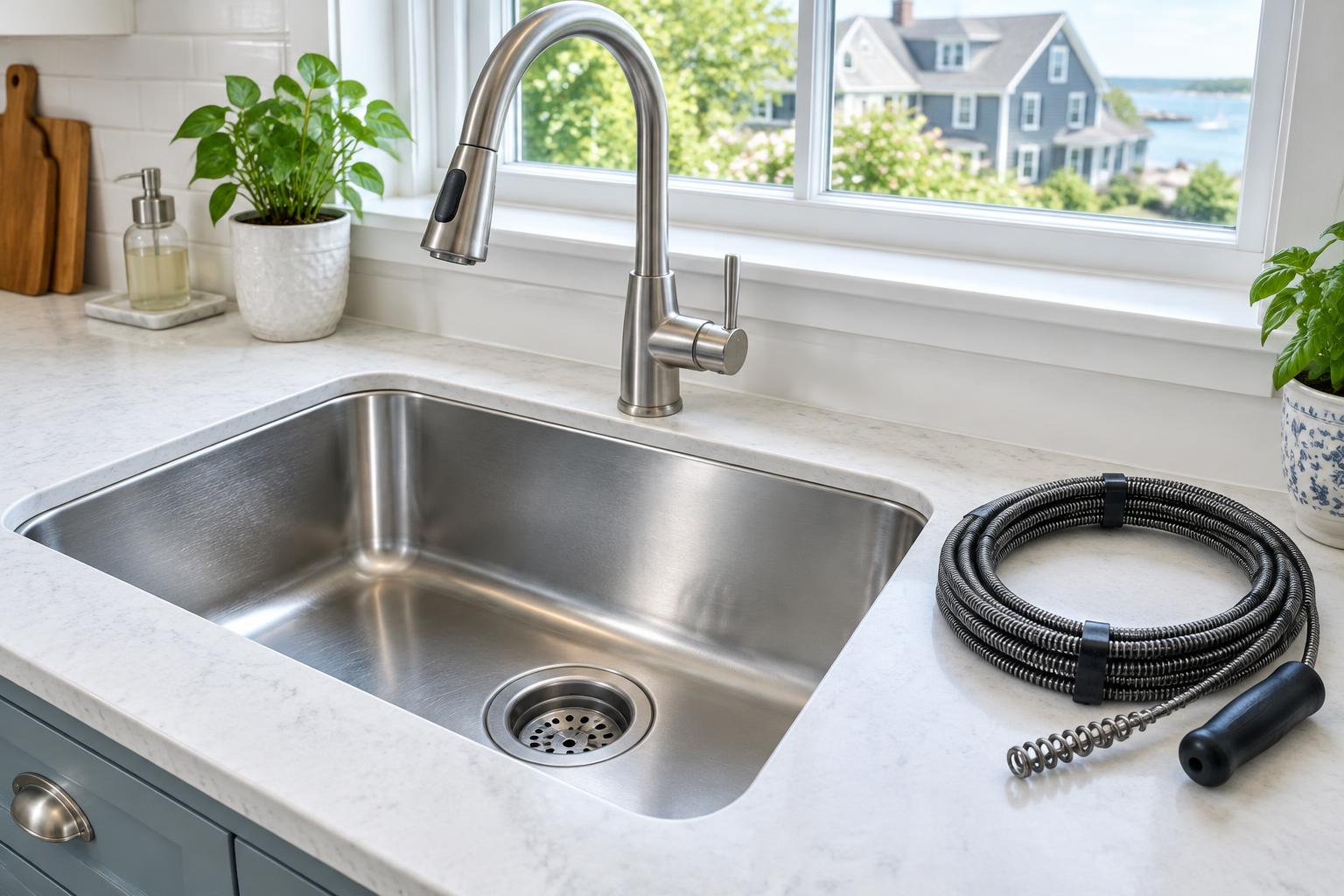
A slow sink is easy to dismiss until it stops draining altogether. Drain cleaning starts with understanding whether the trouble is limited to one fixture or affects a shared line. For homeowners in Lowell and the Merrimack Valley, that distinction helps avoid treating the same symptom repeatedly while a larger problem goes unresolved.
The short answer
One slow drain may point to a local blockage. Several affected fixtures, recurring clogs, or wastewater backing up deserve a professional survey rather than another bottle of cleaner.
What your drains are telling you
A bathroom sink that empties slowly can have hair or soap buildup near the fixture. A kitchen sink may be affected by food scraps or grease. Neither symptom identifies the exact location of a blockage on its own. Pay attention to the pattern: did the change happen suddenly, and does it return soon after the drain is cleared?
Gurgling or odors can accompany drainage problems, but they are not proof that a sewer line needs replacement. A plumber needs to consider the trap, venting, connected fixtures, and the drain itself before recommending work.
- Record which fixtures are affected and when the problem occurs.
- Mention whether water rises in another fixture when you run a sink or flush.
- Tell the plumber about previous clogs and any products used.
Safe first steps before your appointment
Remove accessible hair or debris from a strainer without dismantling plumbing. Stop using a fixture that is backing up. If several fixtures are affected, limit water use until the drainage issue can be assessed; additional water may have nowhere safe to go.
Do not mix drain chemicals or add another product to standing water that already contains a cleaner. Tell the plumber what was poured into the drain. Avoid escalating to powered equipment without knowing the pipe condition, and do not assume boiling water is appropriate for every pipe or fixture.
Drain cleaning versus a sewer survey
Cleaning removes an obstruction; a survey helps establish why the obstruction occurred. A recurring problem may justify looking beyond the fixture to a shared drain or sewer line. MAD advertises drain and sewer services, including camera surveys, so the recommendation can be matched to the findings rather than guessed from the symptoms.
Commercial hydro-jetting is also among MAD’s advertised services, but it is not automatically the right method for every pipe. Access, pipe material, condition, and the type of buildup matter. A diagnosis should come before selecting the equipment or approving a repair.
Reduce the chance of the next clog
Use strainers for hair and food scraps. Collect cooking grease in a container for disposal rather than rinsing it into a sink. Follow local disposal guidance and keep wipes, hygiene products, and other non-toilet-paper items out of toilets.
For persistent drainage issues in Andover, Chelmsford, Lowell, or elsewhere in MAD’s service area, book a plumbing diagnostic and describe the full pattern. Clear findings help distinguish a cleaning task from work on the line itself.
Sources & further reading
General information, not a diagnosis for your property. Follow equipment instructions and current local requirements. Images are illustrative.