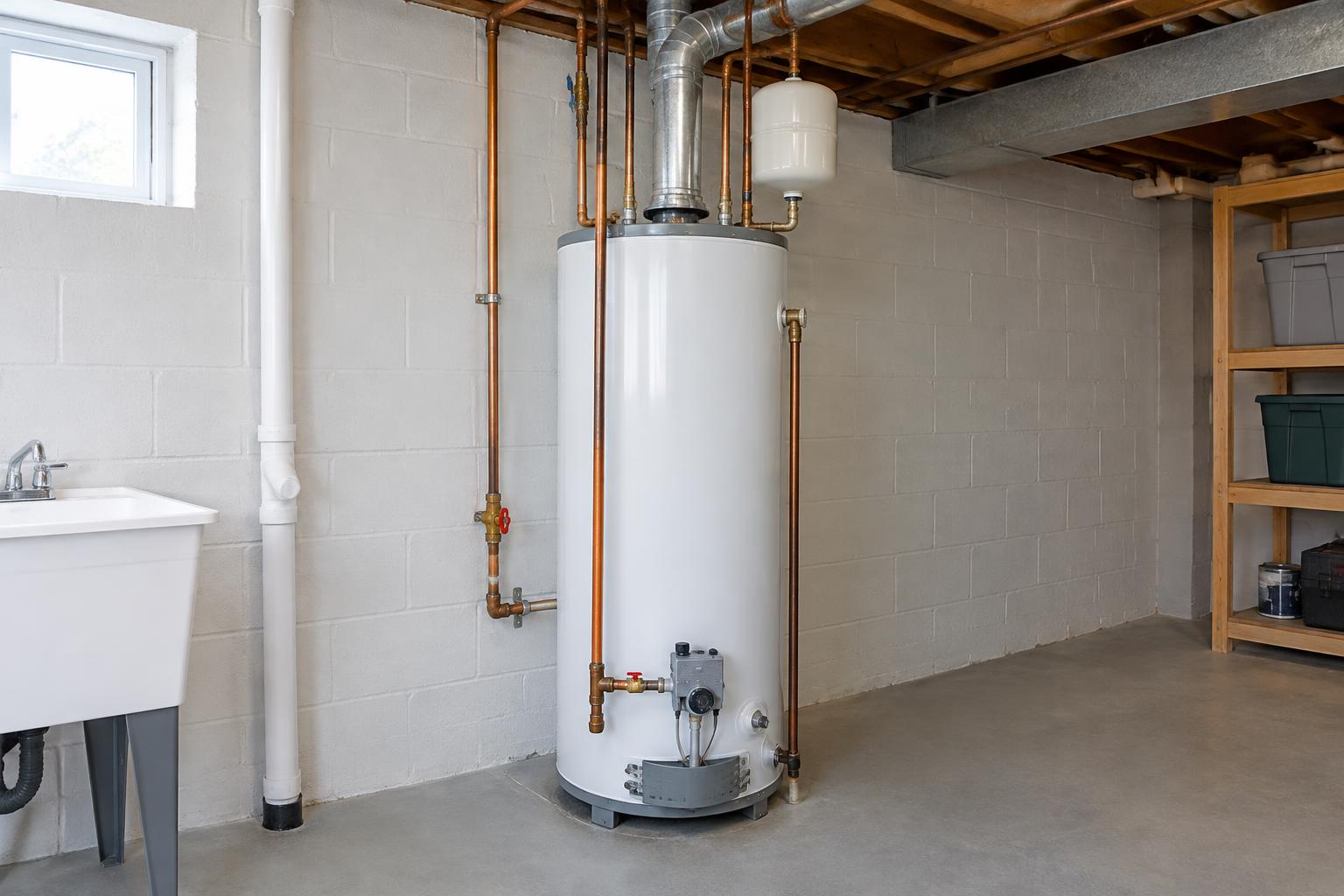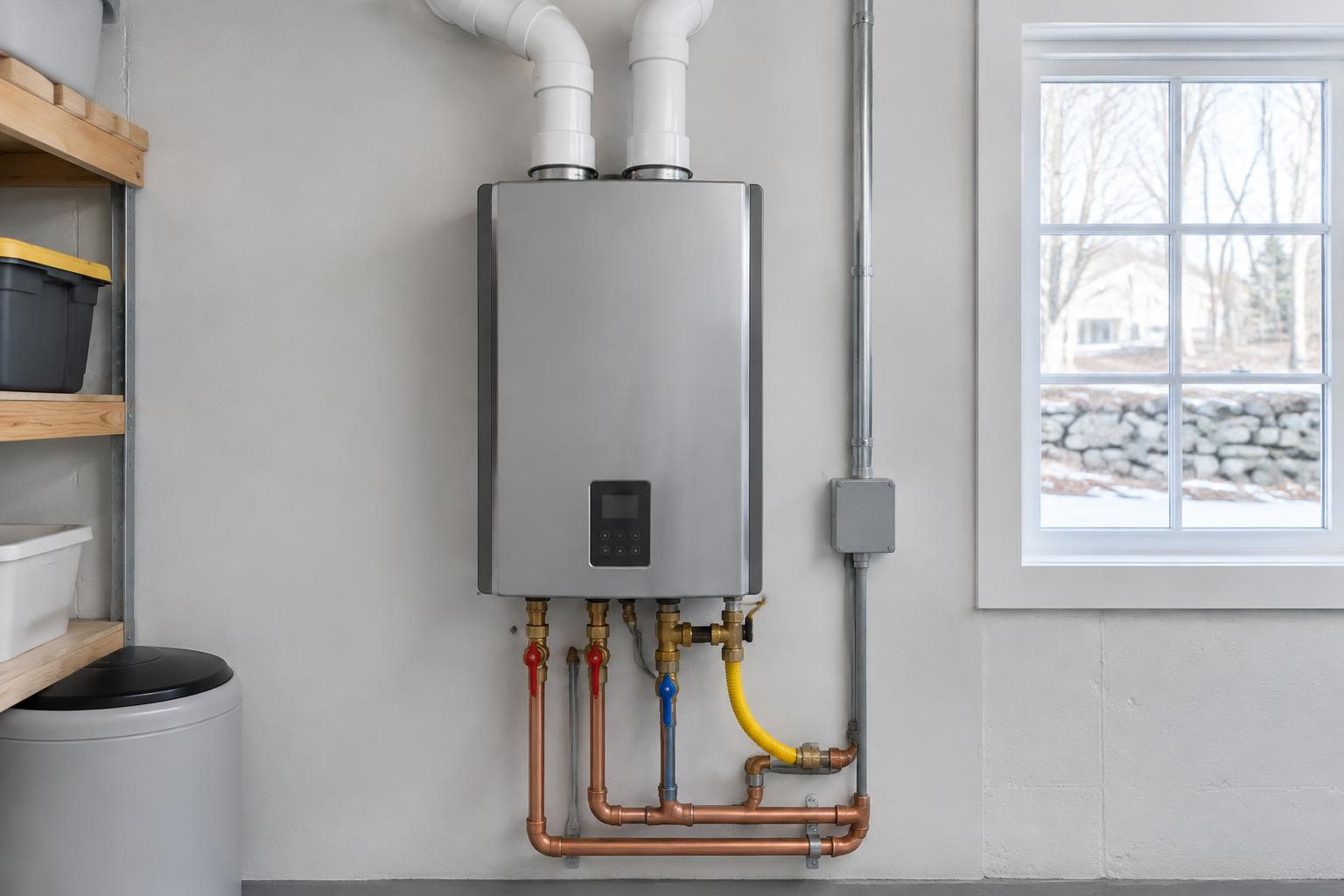
A tankless water heater heats water on demand rather than storing a large tank of hot water. That difference can be useful, but it does not make tankless the best fit for every home. Before changing equipment in a Merrimack Valley property, compare demand, installation requirements, and ongoing maintenance.
The short answer
Tankless capacity depends on simultaneous demand and the temperature rise needed. Have the existing installation surveyed before selecting a model or assuming the conversion is straightforward.
On-demand does not mean unlimited flow
A tankless unit heats incoming water as you use it. ENERGY STAR explains that gas tankless models avoid the standby losses associated with holding hot water in a storage tank. However, each unit has a rated output, so simultaneous showers and appliances still create a sizing challenge.
Storage heaters are commonly described by tank volume, while tankless performance is described by flow and temperature rise. A high flow figure in a product listing may not represent the output under your home’s winter conditions. Ask which conditions the rating assumes.
Why incoming water temperature matters in Massachusetts
The Department of Energy notes that sizing must account for both peak simultaneous flow and the required heat rise from the winter cold-water temperature to the chosen hot-water setting. Colder incoming water requires more heating for the same delivered temperature.
Make a realistic list of what may run at the same time. A shower plus a dishwasher is a different demand than several showers during a busy morning. Actual fixture flow, household habits, and equipment performance should guide sizing rather than a generic household-size chart.
- List the fixtures and appliances likely to use hot water together.
- Describe any existing hot-water shortages.
- Ask how the proposed unit performs at winter incoming-water temperatures.
A conversion is more than an appliance swap
ENERGY STAR recommends an in-home estimate that considers the gas supply, electricity where needed, and combustion venting for gas tankless installations. Equipment location and access also affect the work. Some installations may need changes that do not apply to a similar storage-heater replacement.
Do not assume that a wall-mounted unit can use every existing connection unchanged. Ask what plumbing, venting, condensate handling where applicable, and permitting the proposal includes. Your installer should verify the requirements for the specific model and current local rules.
Plan for maintenance and compare alternatives
Follow the selected manufacturer’s maintenance instructions. Water conditions and the unit design affect the maintenance needed; there is no one-size-fits-all flushing schedule that should override the manual. Ask how the equipment will remain accessible for servicing.
MAD advertises water heater installation and repair. Start with a survey of your current system and discuss whether a tankless proposal is suitable for the property. Compare it with an appropriately sized storage option rather than assuming an upgrade must mean tankless. Request a custom scope before approving any installation.
Sources & further reading
- ENERGY STAR: Whole-home tankless gas water heaters
- U.S. Department of Energy: Gas-fired tankless sizing
General information, not a diagnosis for your property. Follow equipment instructions and current local requirements. Images are illustrative.