A running toilet wastes water quietly, while an overflow makes the problem impossible to miss. Toilet repair should start by separating the symptom: does water keep running into the bowl, appear at the base, or fail to drain after flushing? Different symptoms require different checks.
The short answer
Stop repeated flushing when a toilet is blocked, and do not assume water at the base is harmless. Describe the exact symptom so the fixture and its connected drain can be surveyed.
A toilet that runs after flushing
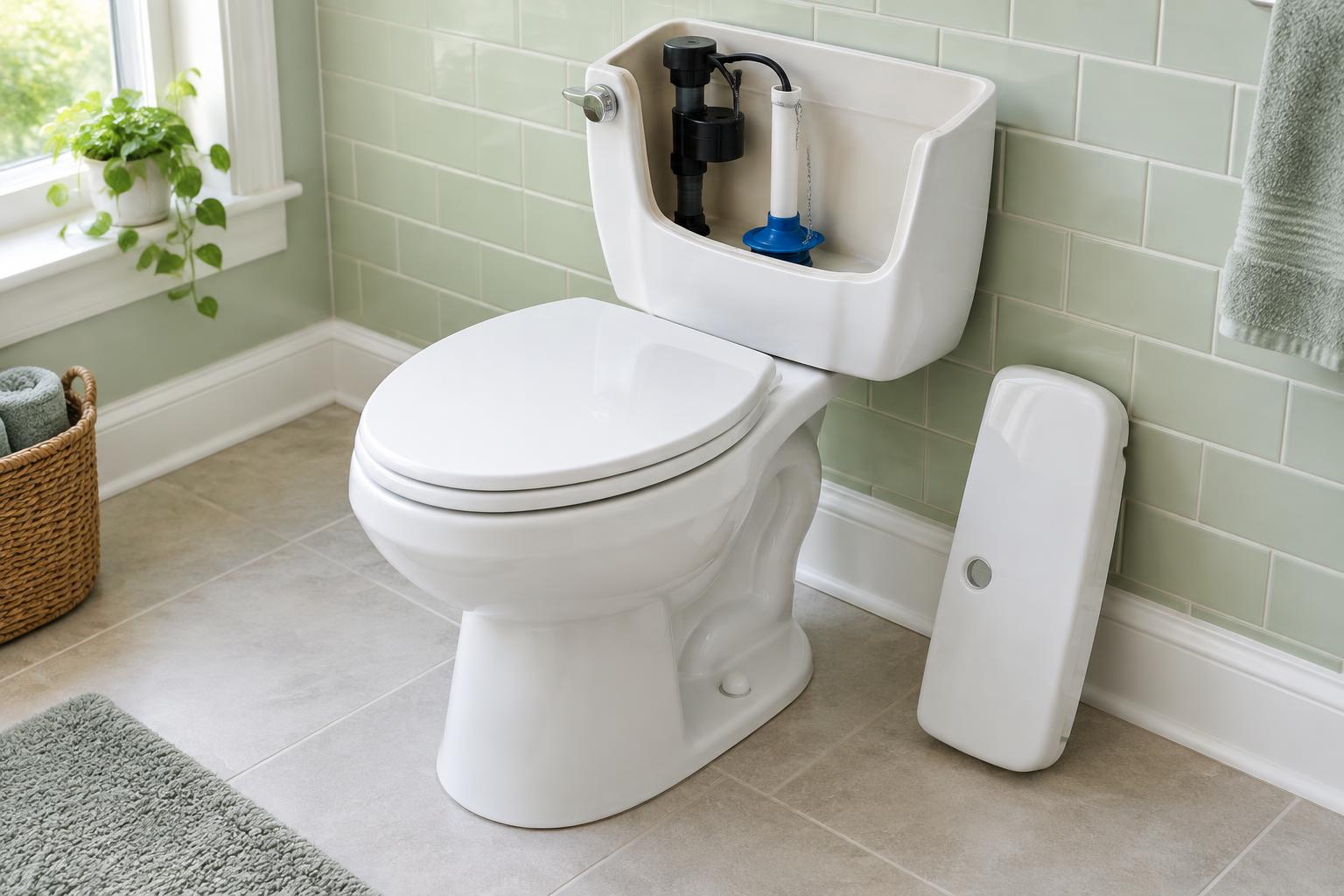
EPA WaterSense notes that worn toilet flappers and malfunctioning fill valves can be sources of household leaks. A tank that repeatedly refills or water that appears to keep entering the bowl can indicate a sealing or fill-system problem, but the exact part should be checked.
A dye test can help identify tank-to-bowl leakage: follow EPA guidance or the toilet manufacturer’s instructions, place suitable coloring in the tank, and watch for color in the bowl without flushing. Flush afterward to avoid staining. A positive result shows a leak path, not which replacement part fits.
Water around the base needs attention
Water around the toilet can come from more than one place, including the supply connection, tank, condensation, or the base connection. Note whether it appears while flushing or between uses. Avoid assuming that tightening a bolt will solve the problem; excessive force can damage a fixture.
Stop using a toilet with an unexplained active leak until it can be assessed. Water can reach flooring or other concealed materials even when the surface puddle seems small. Tell the plumber if the toilet moves, the floor feels soft, or the area below has a stain.
Repeated clogs may not be only a toilet problem
Do not keep flushing a bowl that is rising. If safely accessible and working, the fixture shutoff can stop additional supply water; do not force a stuck valve. Keep children and pets away from wastewater, and avoid chemical drain cleaners in a toilet.
A toilet that clogs repeatedly may need a fixture assessment or a drain survey. If nearby drains gurgle or water backs up elsewhere, describe that shared pattern. It is useful evidence when deciding whether the problem is in the toilet or farther downstream.
- Record whether one toilet or multiple fixtures are affected.
- Mention any non-toilet-paper items that may have been flushed.
- Report leaks, movement, or earlier attempts to clear the blockage.
Repair or replace the fixture?
Compatible replacement components may be appropriate for a serviceable toilet. A cracked fixture, repeated failures, or other condition issues can change the decision. The repair scope should account for the supply, connections, and drain rather than only the visible mechanism in the tank.
MAD’s bathroom plumbing and fixture repair services begin with a diagnostic and clear recommendations. In Lowell and surrounding Merrimack Valley communities, book a service day and include whether the toilet runs, leaks, or clogs. That is more useful than requesting a specific part before the cause is known.
Sources & further reading
General information, not a diagnosis for your property. Follow equipment instructions and current local requirements. Images are illustrative.